
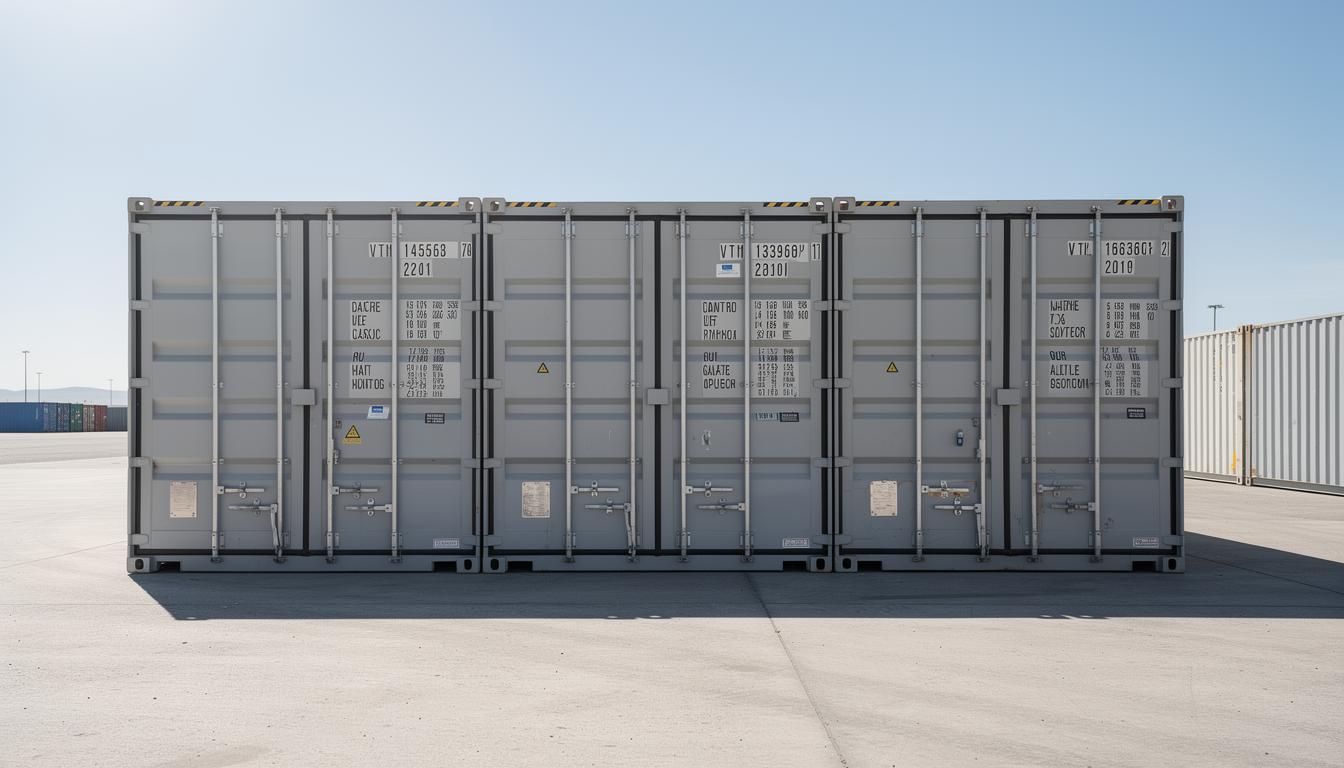
The scene unfolds, a corner overwhelmed by boxes, the frantic search for a place for every extra pallet, always a ceiling too low or a volume too tight. New ideas rarely surface in these confines — but that changes fast. High cube containers cut through limits, a foot higher, arguably a world taller. Storage gets reimagined, space no longer feels restrictive. Who claims every vertical inch, never bows down to lack of room? High cube containers answer in bold moves, every time.
A voir aussi : Legionella log book: essential tool for compliance and risk management
The extra foot that changes storage constraints
First glance, lined up in a freight yard or squeezed along city streets, the high cube container stands apart. No need to tally inches — the difference shouts from its posture. Suddenly the question feels different: has anyone noticed how this extra height redraws daily operations? More, always more — more air up top, more shelving, more breathing space, fewer compromises. Racks line up straight, machinery stays upright, awkward shapes slip in, not crouched or forced. Often, the impact gets measured in surprise: all that room above, suddenly possible to use. High Cube Containers consistently deliver vertical freedom that transforms how operators approach daily storage challenges.
Avez-vous vu cela : Essential tree surgery services in aberdeen you can trust
The main characteristics of high cube containers
Space makes an immediate impression. While a standard 40-foot unit offers routine dimensions, a high cube jumps higher, opening up new scenarios. Below comes a direct comparison, no fanfare, only the numbers that prompt tough decisions with ease.
Container Type External Height (ft) Internal Volume (m³) Max. Payload (tons) Standard (40 ft) 8.5 67.7 26.7 High Cube (40 ft) 9.5 76.4 26.6
International standards, those never-changing rules — ISO 668:2026 dictates everything down to the millimeter. Twelve percent more internal volume, the figure looks neat but the experience feels exponential. Shelves, tools, stockpiles that never fit before? They land upright and orderly. High cube containers refuse to limit potential, always providing the extra space found nowhere else.
The structure and durability of large storage containers
Approach a high cube container, expect something robust. Corten steel leads the construction, holding its color and form against time and weather. Ocean crossings, yard winters, tropical rains — all slip off. Open a door, notice floors in reinforced bamboo or plywood, standing up to unforgiving weights. Rubber gaskets close with intent, no stray drop infiltrates. Protection, reliability, and capacity join forces. Inside, insulation tucks in easily above heads, making temperature control realistic in any region, and comfort always sits within reach.
The new dimensions for business and logistics
No one anticipated the feeling the first time a full-length shelf stands tall, the elation when a pallet loader glides into the extra height. Operations transform, costs shrink, teams breathe again. If more space solves multiple headaches — those headaches cease.
The increased storage flexibility in high cube containers
Factories and distribution centers pick them for maximum adaptability. That extra height — roughly 12 percent more — breathes life into static routine. Pallets of equipment, art crates, long parts rest upright and undisturbed. Back shops, disaster supply hubs, seasonal overflow — all sit comfortably, no bending or squeezing. Once the shelves go up, every square centimeter looks different, the vocabulary of verticality changes the way things move. The vocabulary of space expands, everything organized, nothing forced. Watch a contractor store ladders and gear; an art restorer sets up conservation supplies, all benefitting from the ceiling’s added generosity.
The efficiency factor in storage costs
Container Type Operational Cost per m³ ($) Needed Units (for 600 m³) Standard (40 ft) 5.65 9 High Cube (40 ft) 5.05 8
Every increase in volume becomes an ally against rising operational costs. Fewer containers needed, less ground covered, faster runs from truck to shelf. Operations with tight margins thrive, congestion disappears from cramped yards. Loading gets easier; racks remain uncompromised; operators move goods without constant recalibration or compromise. The numbers make sense quickly, the operational rhythm finds its natural pace.
- Stacking efficiency minimizes wasted floor area and speeds up logistics flows
- Fewer units placed means less site work and simplified management
- Modular storage options keep operations nimble through seasons and surges
The unexpected uses and applications for high cube containers?
The value of extra height never stops at raw storage. Adaptable workshops roll up to events, equipped with lighting, racks, raised technical floors. Designers see pop-up retail spaces come alive, architects play with internal mezzanine designs, clinics pop up in remote zones, confident nothing gets cramped. This adaptability accounts for high cube containers dominating innovation in the market. Electronic components, hydroponic installations, customized offices, even exhibition spaces for art and tech — this volume creates new blueprints for every sector. Mistaken for temporary, these giants settle in as long-term assets, evolving with every need that arises.
The practical realities before deployment
A tall container on a low lot — there lies disaster in the making. Truck drivers call; branches, wires, signs threaten to halt progress meters from delivery. Sometimes what stands tall needs more than an open spot on gravel. Interventions get needed: strong footing, reinforced pads, even site surveys long before delivery trucks back in. And regulations, who forgets those? Every region, municipality, project manager insists — check the codes, measure the clearance, call ahead.
The site preparation for high cube containers
Crucial steps, often overlooked: Overhead clearance proves decisive. Tree limbs, lines, sloping lots, all need a second look. More weight gets transferred to a smaller support area: ground shifts pose a serious risk. Not uncommon for crews to lay concrete, diagonal supports, even full drainage systems — someone always wishes these steps got managed earlier. Containers lean, puddles form, access ramps falter if shortcuts win the day. Extra patience upfront pays back for years.
The cost, price, and waiting game behind large storage containers
Higher, always higher, and that includes prices. Supply swells, demand spikes; ports compete for units, average costs creep upward.
Container Type New Price (2026 avg. USD) Used Price (2026 avg. USD) Avg. Lead Time (weeks) Standard (40 ft) $5,200 $3,000 2 High Cube (40 ft) $5,950 $3,700 4
Cities with bustling ports — Singapore, Rotterdam, Los Angeles — field better stock, better deals. Inland or remote towns grapple with waits, prices adjust overnight, sometimes not pleasantly. Renting emerges for those on tight timelines, custom builds for the long-haul thinkers. No answer fits all, sometimes waiting sounds wise, sometimes not. Customization gets quoted separately, always, as features extend beyond baseline needs.
The recurring sectors and standout stories for high cube containers
Some businesses boast, keep their secrets, but high cube containers don’t need noise — their presence announces change. Construction crews adopt them for tool safeguarding, office pop-ins, workshop efficiency directly on busy sites. Shipping lines pass oversized goods, machinery, farm tools with fewer paperwork hiccups, compliance gets stamped without debate.
The industries continuously drawn to high cube containers
Construction grinds on, cycles never slow, and standard space often lacks. Retailers in mid-sized cities arrange for seasonal overflow, skipping rent stress. Farming families protect machinery or crops from extremes, gaps between weather and workflow close thanks to insulated units. Logistics leaders count on high cube containers for complex loads, while event agencies design modular venues out of them, style and utility finally merging. Suppliers report 38 percent of all new container orders in 2026 tallied in the high cube column, a pace showing no signs of slackening.
The lived experience of space and function
One anecdote lingers: Toulouse, a retailer, retrofitting a high-cube for a summer boutique run. Festival crowds file in, ceiling lamps glow above fitting rooms, merchandise hangs with air to spare. On another continent, mine site machinery now stands upright, downtime crashes, everyone relieved. Construction managers regularly remark, “No more ducking, finally.” Across art fairs, sports venues, project offices — containers become mobile labs, living quarters, design studios, boundaries blurred by what hosts refuse to compromise. That old myth, all storage squares must fit the same — it’s officially expired.
What keeps facilities restless at night? Storage that stifles, space that shrinks as demand grows. High cube containers tear open the ceiling, in a literal and figurative sense. Standards don’t dictate limits anymore; upward is not a hope, but a strategy. Racks climb, workflows ease, limits become optional. That nagging feeling, “Will everything fit?” — not so present after all.